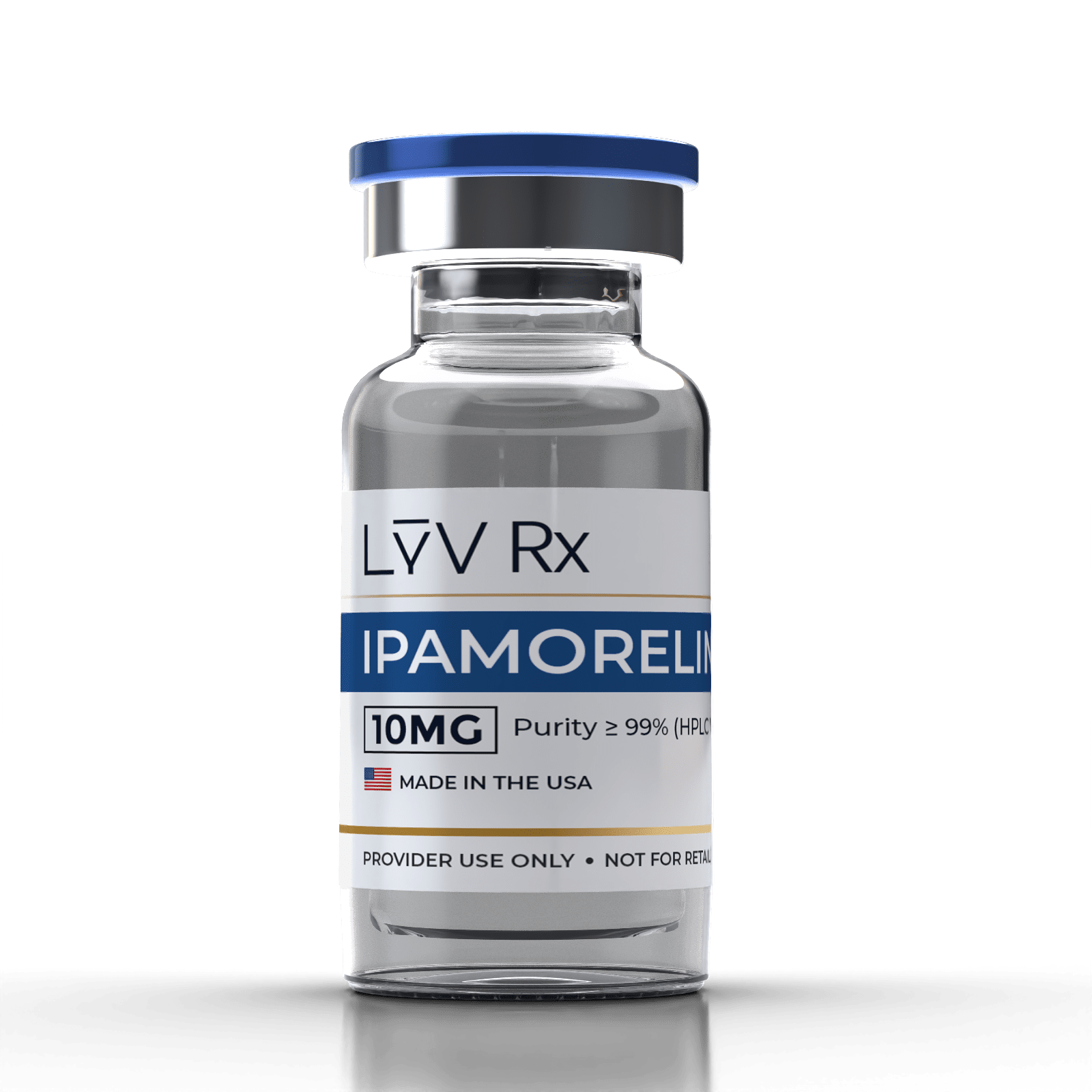
Ipamorelin
$60.99 — or $54.89 / month
Ipamorelin is a synthetic pentapeptide and selective growth hormone secretagogue receptor agonist used to investigate growth hormone release mechanisms and ghrelin receptor signaling.
Out of stock
Origin & Classification
Ipamorelin is a pentapeptide analog (Ala-Trp-Lys-Asn-Gly) engineered to selectively bind to and activate the growth hormone secretagogue receptor (GHSR), also known as the ghrelin receptor. Unlike some earlier growth hormone-releasing peptides, Ipamorelin is designed to minimize off-target interactions with other receptors such as those mediating cortisol or prolactin release. It is synthesized via solid-phase peptide synthesis and purified to homogeneity.
Mechanism & Research Context
Upon binding to GHSR on anterior pituitary cells and hypothalamic neurons, Ipamorelin activates Galphaq/11-coupled signaling pathways. This activation stimulates phospholipase C, increases inositol triphosphate and diacylglycerol, elevates intracellular calcium, and ultimately triggers growth hormone secretion. Researchers employ Ipamorelin to study the regulation of growth hormone synthesis and release, investigating interactions with GHRH and somatostatin feedback loops, receptor desensitization, and signaling cross-talk with metabolic regulators. Studies also explore how ghrelin receptor activation influences appetite regulation, gastrointestinal motility, and energy homeostasis, but maintain a mechanistic focus without inferring therapeutic outcomes.
Composition & Quality
Ipamorelin is supplied as a lyophilized powder or sterile solution with purity exceeding 95 %. It is produced under GMP-aligned conditions and undergoes purification by preparative HPLC, followed by analytical testing via mass spectrometry and amino acid analysis. Quality control includes checks for peptide identity, content, and absence of endotoxins or microbial contamination. The peptide exhibits high stability when stored lyophilized at low temperatures; reconstituted solutions should be handled carefully to avoid peptide degradation. Certificates of analysis provide details on purity, sequence, and recommended storage.
Summary & Unified Disclaimer
This description summarizes the scientific context of the molecule. It is provided for educational and research discussion purposes only. It is not intended to diagnose, treat, cure, or prevent any disease, and no medical or consumption claims are made.
| Weight | 0.05 lbs |
|---|---|
| Dimensions | 1 × 1 × 2 in |
How Lyv Rx Works
Place Your Order
Enjoy our simple and secure shopping experience
Get medical approval
Our licensed physicians review every order placed
Optimize your health
Each order is shipped same-day to keep you moving
Reviews
There are no reviews yet.