
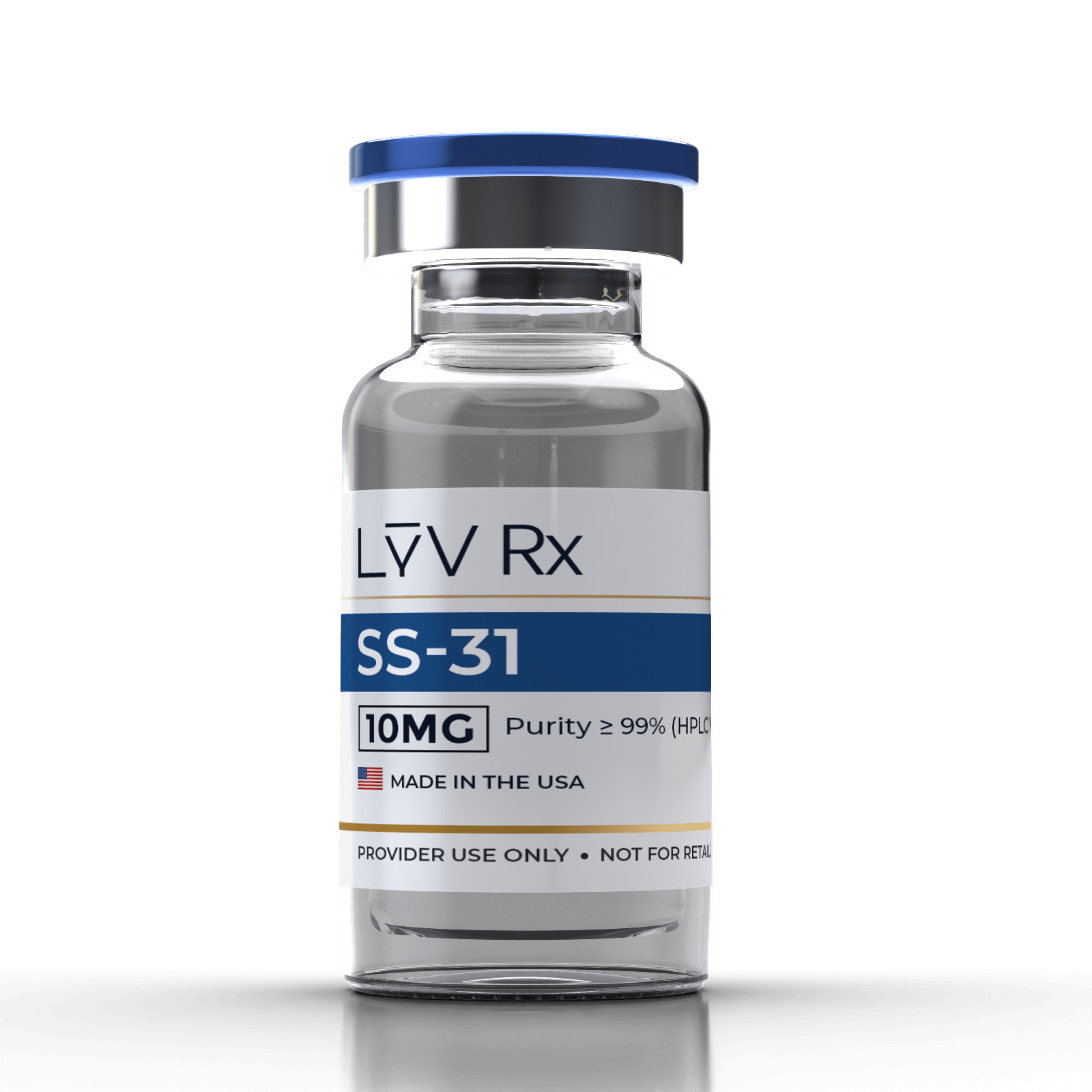
SS-31
$69.99 — or $62.99 / month
SS-31, also known as Elamipretide, is a mitochondria-targeted tetrapeptide that selectively binds to cardiolipin and is studied for its role in regulating mitochondrial function and oxidative stress.
Only 10 left in stock
Origin & Classification
SS-31 is a synthetic tetrapeptide composed of D-arginine, dimethyltyrosine (Dmt), lysine, and phenylalanine, with a C-terminal amide. It was designed to target mitochondria by virtue of its alternating aromatic-cationic motif and is classified as a mitochondria-penetrating peptide. The peptide is produced via solid-phase synthesis and is amidated at the C terminus to enhance stability.
Mechanism & Research Context
SS-31 selectively associates with cardiolipin, a phospholipid localized to the inner mitochondrial membrane that is critical for the organization of respiratory chain complexes. Binding of SS-31 to cardiolipin is thought to preserve the structural integrity of mitochondrial cristae and support electron transport chain efficiency. Researchers use SS-31 to explore mechanisms of mitochondrial dysfunction and oxidative stress, assessing its impact on membrane potential, ATP production, and reactive oxygen species generation. Studies investigate signaling pathways related to mitochondrial biogenesis, mitophagy, and apoptosis, examining interactions with proteins like cytochrome c and regulators such as AMPK and PGC-1alpha. The peptide serves as a tool to probe mitochondrial contributions to systemic physiology in contexts like ischemia-reperfusion injury and metabolic disorders.
Composition & Quality
SS-31 is supplied as a lyophilized peptide with purity typically above 95 %, verified by reverse-phase HPLC and mass spectrometry. It is synthesized under GMP-aligned conditions, with quality control including identification of the D-amino acid composition, endotoxin testing, and assessments of residual solvents. The peptide exhibits high stability and solubility in aqueous solutions, and storage recommendations include desiccated conditions at low temperature. Certificates of analysis accompany each lot, documenting sequence, purity, and recommended storage.
Summary & Unified Disclaimer
This description summarizes the scientific context of the molecule. It is provided for educational and research discussion purposes only. It is not intended to diagnose, treat, cure, or prevent any disease, and no medical or consumption claims are made.
| Weight | 0.05 lbs |
|---|---|
| Dimensions | 1 × 1 × 2 in |
How Lyv Rx Works
Place Your Order
Enjoy our simple and secure shopping experience
Get medical approval
Our licensed physicians review every order placed
Optimize your health
Each order is shipped same-day to keep you moving
Reviews
There are no reviews yet.